A wound doesn’t
need a discharge
to get seen.
Physician wound rounds inside your building — so a resident who is doing well otherwise doesn’t have to leave, and doesn’t have to move to a higher level of care to get treated.
Philadelphia and surrounding PA suburbs · South Jersey · Wilmington, DE and surrounding areas
Assisted living residences · Personal care homes · Independent living · Continuing care retirement communities
The resident who looks fine is the one to watch.
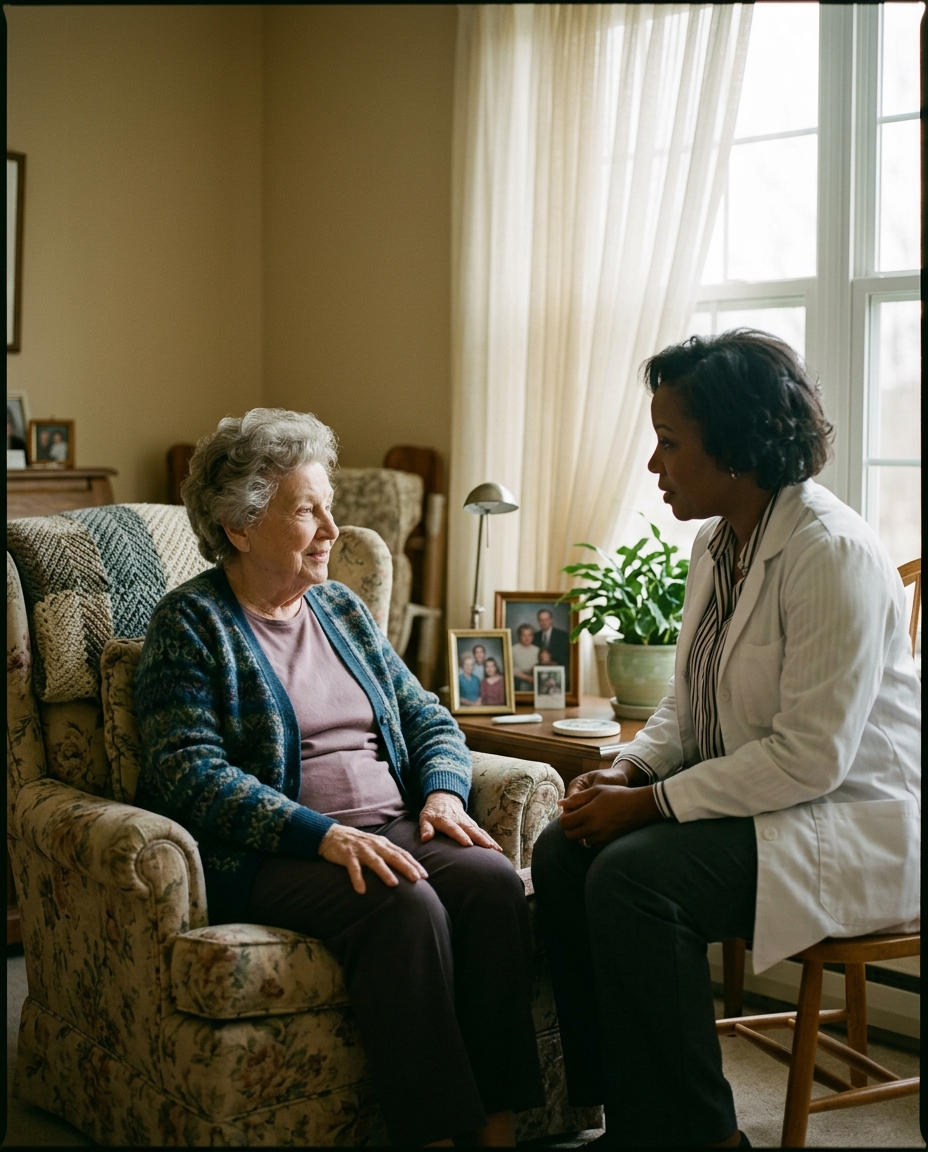
In assisted living and personal care, residents dress themselves, walk to meals, and keep their own routines. That independence is the point of the setting — and it is exactly why a pressure injury on a heel, or a venous ulcer under a sock, can go three weeks without anyone seeing it. Nobody is doing a daily skin check on someone who is managing.
When it does surface, the options are bad. Send the resident out to a wound clinic, which means transport, a family member, and most of a day. Or watch it, and hope. Too often the third option arrives on its own: the wound outruns the setting, and a resident who was thriving gets moved to skilled nursing for something that started as a manageable problem.
A physician rounding in the building changes the arithmetic. The wound gets assessed early, treated on site, and followed on a schedule — and the resident stays in the apartment they chose.
Aging in place only works if the care can travel. Ours does.
Four kinds of community
Licensure and staffing differ across these settings, and across Pennsylvania, New Jersey and Delaware. What stays the same is that none of them are built to deliver physician-level wound care on their own.
- Assisted living residencesHigher-acuity residents supported to age in place, where a wound is often the thing that threatens that plan.
- Personal care homesA distinct licensure category with its own limits on the care a resident may receive while staying. Wound management on site helps keep residents within them.
- Independent livingResidents managing their own health entirely. A physician visit in the apartment, arranged through the community or the family.
- Continuing care retirement communitiesOne wound care relationship across the whole campus, so care follows a resident between levels instead of restarting.
What the visit includes
Comprehensive bedside wound care delivered inside your community, on a schedule your staff can plan around.
- Scheduled bedside evaluationPhysician wound evaluation and treatment in the resident’s own room or apartment, on a set rhythm rather than by exception.
- Interventional treatment on siteComprehensive bedside interventional wound treatments, including debridement, incision and drainage, biopsies and cauterizations.
- Fewer moves to a higher level of careEarly, consistent wound management supports residents remaining in the setting they chose.
- Less transportationReduced need for transport to hospitals, podiatrists and wound care centers — easier for your aides and residents, and cheaper for families.
- Complimentary staff educationWound education for your care staff and aides at no cost, covering identification, staging and prevention — the skills that catch a wound in week one.
- Documentation you can fileDetailed wound consultation reports written for your records and for state and federal compliance.
- WTA-C certification courseA wound certification course (WTA-C) is available to your staff, offered in collaboration with the WOCN Society.
Tell us where the building is.
Pick your setting, give us the community address, and we will call back to arrange the first round. Do not enter resident information in this form — once you submit, you will get the fax number and the document checklist for the clinical packet.
Now send the clinical packet
Fax or secure email the documents below. Please do not send resident information by ordinary email.
- Facesheets with complete demographics and insurance
- Medication list
- Recent vitals, including height and weight
- Relevant labs and imaging reports
Send us the resident who needs bedside wound care.
Fax it, email it, or call the office and read it to us. One referral is usually all it takes to see how AFRA works.
- Office888-707-2372
- Fax888-919-6863
- ReferralsReferrals@afrawound.com